The Monsanto Monopoly: Why Farmers Can’t Legally Replant Their Own Seeds!!
The Monsanto Monopoly: Why Farmers Can’t Legally Replant Their Own Seeds!!

Imagine a company so powerful that it owns more than 80% of the seeds planted in the United States. A company that employs private detectives to spy on farmers, creates a hotline for neighbors to snitch on each other, and has spent decades manipulating scientific data to cover up the health risks of its products.
This isn't a plot from a dystopian novel; it’s the history of Monsanto. From the battle over herbicides to the creation of "Roundup Ready" GMOs, here is how one corporation fundamentally changed the landscape of global agriculture.
WATCH THE FULL VIDEO BELOW --👇👇👇👇
The Secret Ingredient: 2,4-D and the Birth of Weed Killers
In the 1940s, chemist Franklin D. Jones discovered that certain synthetic hormones could act as "plant cancer." He found that 2,4-D would kill broadleaf weeds like dandelions and poison ivy while leaving grass and staple crops like corn and wheat completely untouched.
Monsanto jumped into this burgeoning $10 million industry, producing massive amounts of 2,4-D and its deadlier cousin, 2,4,5-T. However, an explosion at their factory in 1949 revealed a dark secret: their production process created a toxic byproduct called dioxin. Despite knowing that dioxin caused severe skin lesions and long-term health issues, Monsanto kept it quiet to protect their profits.
Agent Orange and the Vietnam War
During the Vietnam War, the U.S. military used a 50/50 mix of Monsanto's herbicides known as Agent Orange to strip away jungle cover. While the government assured soldiers and civilians it was safe, internal documents showed that Monsanto and Dow Chemical knew dioxin was one of the most toxic compounds ever experienced. The result was a humanitarian catastrophe, with millions of people suffering from cancer and birth defects.
The "Miracle" of Glyphosate and Roundup
In 1970, Monsanto scientist John E. Franz discovered glyphosate, a compound that kills plants by blocking an enzyme (EPSPS) they need to survive. Since humans don't have this enzyme, Monsanto marketed it as "safer than table salt."
Launched in 1974 as Roundup, it became the bestselling agricultural product in history. It allowed for "no-till" farming, where farmers could simply spray a field, kill everything green, and plant their crops directly into the residue.
Creating the Monopoly: Roundup Ready Seeds
Monsanto’s true stroke of genius (and controversy) was the creation of Roundup Ready seeds. By isolating a glyphosate-resistant bacteria found in the sludge of one of their own factories, they engineered crops—soybean, corn, and cotton—that could survive being drenched in Roundup.
To use these seeds, farmers had to sign a strict Technology Use Agreement. Under this contract:
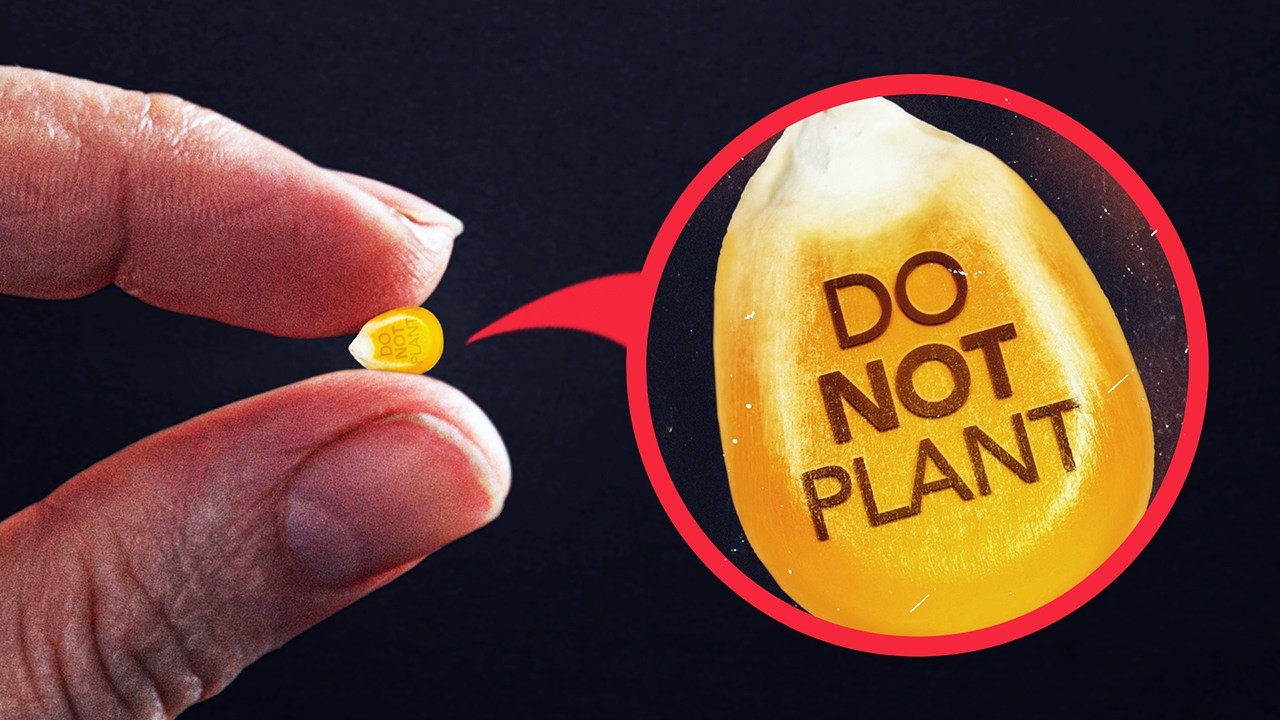
No Replanting: Farmers are legally barred from saving seeds from one harvest to plant the next year. They must buy new seeds every single season.
The Snitch Line: Monsanto set up a 1-800-ROUNDUP hotline for farmers to report neighbors who might be replanting seeds illegally.
Private Investigators: The company sent ex-cops and private detectives to inspect farms and take samples, suing hundreds of farmers and raking in millions in settlements.
The Health Scandal: The Monsanto Papers
In 2015, the International Agency for Research on Cancer (IARC) classified glyphosate as a "probable carcinogen," specifically linking it to Non-Hodgkin Lymphoma.
This triggered a massive legal battle led by lawyer Brent Wisner. Through discovery, Wisner obtained internal memos—the Monsanto Papers—which revealed that Monsanto had:
Ghostwritten Studies: They wrote safety studies and paid scientists to put their names on them to make the research look independent.
Colluded with Regulators: They worked with officials at the EPA to kill opposing research and manipulate cancer classifications.
The "Let Nothing Go" Strategy: They hired PR firms to flood social media and news comments to discredit anyone who suggested Roundup was dangerous.
The $10 Billion Handover
Just as the legal walls were closing in, Monsanto was acquired by the German giant Bayer. It is often cited as the worst acquisition in history; shortly after the deal closed, Bayer lost its first major cancer trial and has since paid out over $10 billion to settle more than 100,000 lawsuits.
The Future of the Field
Today, "Roundup" products in many stores no longer even contain glyphosate due to public backlash. Furthermore, the overuse of the chemical has led to "superweeds" that have evolved resistance, forcing the industry back to older, harsher chemicals like 2,4-D.
The story of Monsanto is a cautionary tale about what happens when a single corporation controls the building blocks of our food supply and the science used to regulate it.
Watch the full investigation below: